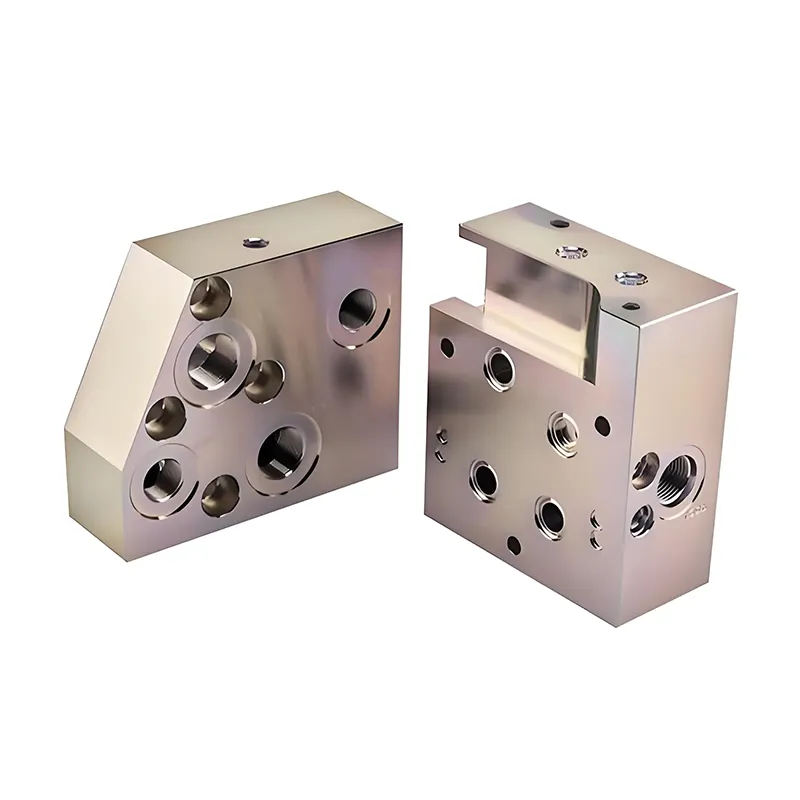
Robotic component prototyping is a core step in robot R&D, functional verification, and performance optimization. It leverages the robot's high-precision transmission, complex motion logic, and multi-scenario adaptability to rapidly transform design solutions into physical prototypes. These prototypes are then used to test key indicators such as structural stability, motion accuracy, and load capacity, ultimately mitigating production risks. Its technology selection and process design share similarities with automotive parts prototyping, but it focuses more on robot-specific requirements such as "precision transmission," "lightweight," and "multi-material compatibility." The following is a detailed analysis of these core dimensions:
Core Objectives and Application Scenarios of Robot Part Prototyping
The core of robotic part prototyping is to verify functional feasibility and rehearse mass production processes, primarily serving the following scenarios:
Precision Transmission Verification: For core transmission components such as reducers, bearings, and gears, prototypes are used to test meshing accuracy and transmission efficiency (e.g., for signs of jamming or abnormal noise) to ensure that robot motion errors are within ±0.01mm (e.g., for industrial robotic arms).
Structural Strength and Load Testing: For load-bearing components such as robotic arm linkages and body frames, prototypes are used to simulate actual working conditions (e.g., carrying a 5kg load) to test bending and fatigue resistance to avoid the risk of "load-induced breakage" after mass production. Motion Flexibility Assessment: For moving parts such as joint assemblies and flexible grippers, prototypes are used to verify range of motion (e.g., rotation angle, telescopic travel), response speed (e.g., grasping action delay), and optimize mechanical structure and control logic.
Multi-Material Compatibility Testing: Robots often require a combination of "metal + plastic + flexible materials" (e.g., metal joints + plastic housing + silicone grippers). Prototyping verification requires verifying the assembly compatibility of different materials (e.g., thermal expansion coefficient matching and connection reliability).
Small-Batch Customization Verification: For specialized robots (e.g., medical surgical robots and explosion-proof robots), small batches of prototypes (10-50 pieces) are required for scenario adaptation testing (e.g., sterility for surgical robots, impact resistance for explosion-proof robots).
We use cookies to offer you a better browsing experience, analyze site traffic and personalize content. By using this site, you agree to our use of cookies. Privacy Policy