Article Summary
Automotive development rarely fails because of one dramatic mistake. More often, it slows down because a bracket does not fit the assembly, a housing cannot hold tolerance after modification, a test part feels correct on screen but behaves differently in metal, or a buyer has to approve tooling before the design is truly ready. This is where CNC Machined Prototypes for Automotive Parts become valuable. They help engineering teams test geometry, strength, assembly fit, material behavior, and manufacturability before committing to molds, dies, or larger production plans.
This article explains how automotive buyers, R&D teams, and sourcing managers can use CNC prototypes to reduce development risk, shorten approval cycles, and make better purchasing decisions. It also discusses how Ningbo Wangdefu Precision Machinery Co.Ltd. supports customers who need accurate, practical, and production-minded prototype machining for automotive applications.
Table of Contents
- Article Outline
- Why Do Automotive Teams Need CNC Prototypes Before Production?
- Which Customer Pain Points Can CNC Machining Solve?
- How Do Materials Affect Prototype Testing?
- Where Are CNC Machined Automotive Prototypes Commonly Used?
- How Does CNC Prototyping Compare With Other Methods?
- What Should Buyers Check Before Choosing a CNC Prototype Supplier?
- How Does a Practical CNC Prototype Project Move Forward?
- FAQ About CNC Machined Prototypes for Automotive Parts
- Conclusion
Article Outline
- Explain why automotive prototype decisions should come before tooling investment.
- Connect CNC machining with real customer concerns such as lead time, fit, tolerance, material selection, and design revisions.
- Compare CNC prototypes with 3D printing, casting, and mold-based production.
- Show practical application areas such as motor housings, valve bodies, steering components, brackets, and custom mechanical parts.
- Provide a purchasing checklist for selecting a capable machining partner.
- Answer common questions from buyers and engineers.
Why Do Automotive Teams Need CNC Prototypes Before Production?
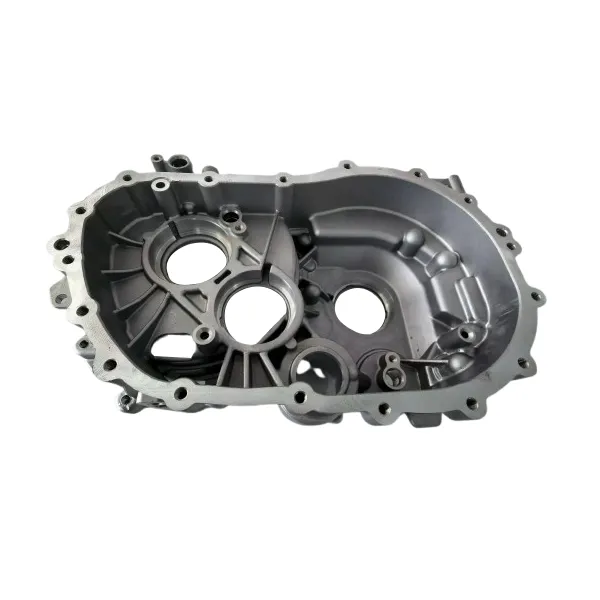
In automotive product development, confidence is expensive when it comes too late. A digital model may look perfect, but real parts have edges, tool marks, stress points, assembly gaps, thermal behavior, and surface requirements that drawings alone cannot fully prove. Before a company spends money on dedicated tooling or moves into mass production preparation, it needs evidence that the part can perform in the physical world.
CNC Machined Prototypes for Automotive Parts give teams that evidence. Unlike rough mockups, CNC prototypes can be machined from engineering-grade metals or plastics with tight dimensional control. This allows designers and buyers to check whether a part can be assembled, tested, inspected, modified, and repeated with reasonable consistency.
For automotive parts, the value is not limited to appearance. A prototype may need to support load testing, vibration checks, sealing evaluation, functional assembly, or trial installation. In these cases, material strength and dimensional accuracy matter. CNC machining is often selected because it can create parts that are close to final-use conditions without requiring expensive mold investment at the earliest stage.
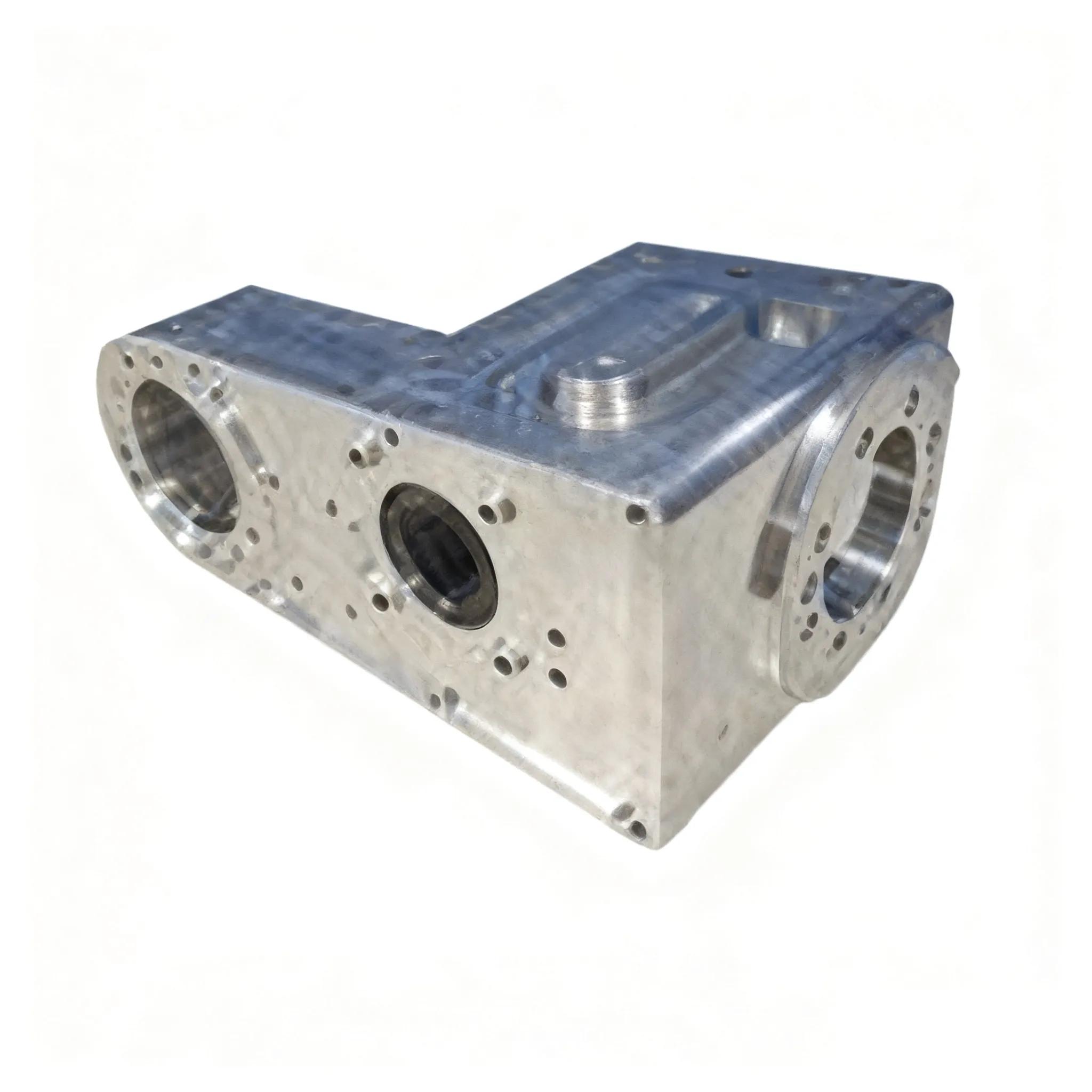
This matters especially for automotive programs where one small component can influence a larger system. A motor housing that does not align properly may affect assembly. A steering gear housing with unstable tolerance may delay testing. A valve body with inaccurate internal geometry may weaken performance evaluation. CNC prototypes help expose these issues before they become expensive production problems.
Which Customer Pain Points Can CNC Machining Solve?
Many buyers search for CNC Machined Prototypes for Automotive Parts only after a project has already started to feel risky. The drawing may have changed several times. The deadline may be close. The purchasing team may be caught between engineering requirements and supplier uncertainty. A capable CNC machining partner can help reduce several common problems.
| Customer Pain Point | Why It Happens | How CNC Machined Prototypes Help |
|---|---|---|
| Design uncertainty | The 3D model has not been tested as a real component. | CNC parts allow physical inspection, trial assembly, and practical design feedback. |
| Tooling risk | Buyers may hesitate to invest in molds before the design is confirmed. | CNC machining supports low-volume production without early mold costs. |
| Tight tolerance concerns | Automotive components often need accurate fitting with surrounding parts. | CNC machining can control key dimensions and reveal tolerance-sensitive areas. |
| Material testing needs | Plastic visual samples may not represent final mechanical behavior. | Machined prototypes can be made from aluminum, steel, engineering plastics, and other suitable materials. |
| Slow design revision | Traditional trial methods can take too long when the drawing changes. | CNC machining can adapt quickly to updated files and small-batch changes. |
The real advantage is control. Buyers are not forced to guess whether the part will work. They can hold it, measure it, assemble it, send it for testing, and request design adjustments based on direct evidence. That makes CNC prototyping practical not only for engineers, but also for purchasing teams who need a safer way to approve the next step.
A useful prototype is not just a sample. It is a decision-making tool. It should help the customer answer clear questions: Does it fit? Can it be machined? Is the material right? Are the tolerances realistic? Should the design be revised before production?
How Do Materials Affect Prototype Testing?
Material choice can change the value of a prototype completely. A part used only for visual confirmation may not need the same material as the final component. But an automotive prototype used for installation, sealing, load, or heat-related testing should be much closer to the final material requirement.
This is one reason CNC Machined Prototypes for Automotive Parts are widely used in practical development. CNC machining can work with many metals and engineering plastics, allowing customers to test a part under conditions that are more meaningful than a display model. Aluminum may be selected for lightweight housings or heat-related components. Steel may be used when strength, wear resistance, or structural performance is important. Engineering plastics may be chosen for insulation, weight reduction, or special functional requirements.
The material should be discussed early. If the prototype is meant for appearance review, cost and surface effect may guide the choice. If the prototype is meant for functional testing, mechanical performance should come first. If the part may move toward low-volume production, material availability and repeatability also become important.
- Aluminum alloy: often used for housings, brackets, lightweight structures, and parts requiring good machinability.
- Steel: suitable for stronger mechanical parts, wear-related components, and structural testing.
- Stainless steel: considered when corrosion resistance or durability is important.
- Engineering plastics: useful for lightweight, insulating, or non-metallic functional parts.
- Customer-specified materials: important when the prototype must match a final production plan or test standard.
Ningbo Wangdefu Precision Machinery Co.Ltd. can support prototype projects where material selection, machining feasibility, and practical testing needs must be considered together. For buyers, this is important because a prototype supplier should not only cut material according to a drawing; the supplier should also understand how the part will be used and what risks the customer wants to check.
Where Are CNC Machined Automotive Prototypes Commonly Used?
Automotive systems are becoming more compact, more integrated, and more demanding. New energy vehicles, intelligent driving systems, and traditional mechanical platforms all require accurate components during development. CNC Machined Prototypes for Automotive Parts can be used across many areas, especially when the part has complex geometry, strict fitting requirements, or functional testing needs.
| Application Area | Prototype Examples | Main Testing Purpose |
|---|---|---|
| Powertrain and motor systems | Motor housings, reducer parts, mounting structures | Assembly fit, heat behavior, dimensional stability, installation verification |
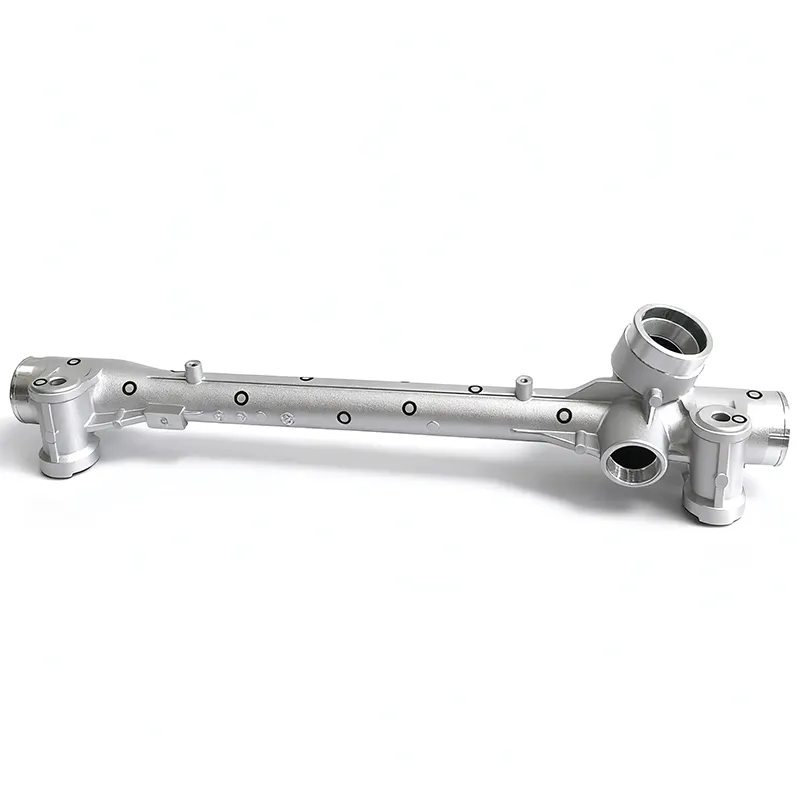
| Steering and chassis systems | Steering gear housings, brackets, support blocks | Position accuracy, structural strength, tolerance coordination |
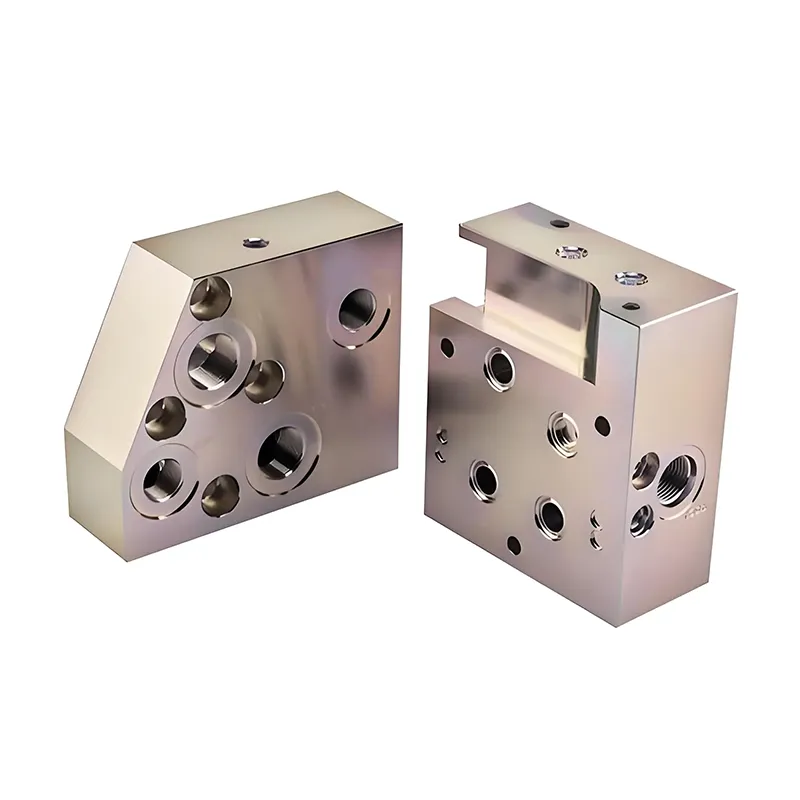
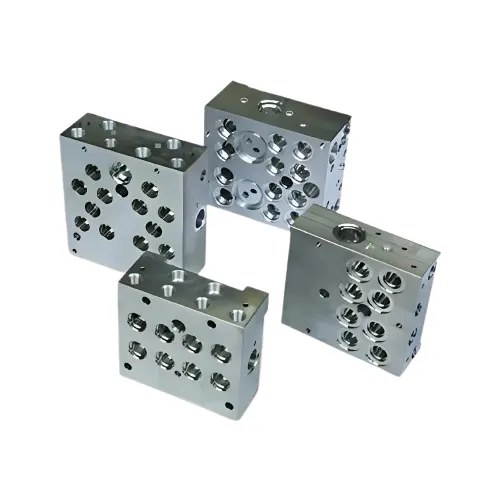
| Fluid and control systems | Valve bodies, manifolds, hydraulic blocks | Internal flow path accuracy, sealing surface checks, functional assembly |
| Interior and exterior mechanisms | Custom connectors, small mechanical structures, mounting fixtures | Fit check, ergonomic testing, appearance and function balance |
| Test fixtures and development tools | Inspection fixtures, assembly aids, trial jigs | Production preparation, repeatable testing, faster engineering validation |
The strongest projects usually begin with a clear testing goal. A buyer should not simply ask for a “prototype” in a general way. It is better to explain whether the part will be used for fit checking, road testing, laboratory testing, assembly validation, customer presentation, or pre-production evaluation. Once the purpose is clear, the machining strategy becomes more accurate.
How Does CNC Prototyping Compare With Other Methods?
No single prototyping method is right for every automotive project. 3D printing, casting, sheet metal fabrication, injection molding, and CNC machining each have their own place. The important point is choosing the method that matches the risk you need to reduce.
| Method | Best For | Limitations | When CNC Is More Suitable |
|---|---|---|---|
| 3D printing | Fast visual models, concept shapes, early design discussion | Material strength, surface finish, and tolerance may not match functional needs | When the part must be tested in metal or tighter tolerance is required |
| Casting | Parts with production-like cast structures or larger volumes | Tooling and preparation may be slower for early-stage revisions | When the design is still changing and low-volume flexibility is needed |
| Injection molding | High-volume plastic parts after design confirmation | Mold cost and lead time are not ideal for uncertain designs | When buyers need samples before committing to mold investment |
| CNC machining | Functional prototypes, metal parts, accurate fit checks, small batches | May not be the cheapest option for very high-volume production | When accuracy, material performance, and revision flexibility matter most |
For many automotive buyers, CNC prototyping sits in the practical middle ground. It is more functional than a simple visual model, but more flexible than hard tooling. That is why CNC Machined Prototypes for Automotive Parts are often used before final production approval.
What Should Buyers Check Before Choosing a CNC Prototype Supplier?
A supplier’s machine list matters, but it is not the whole story. Automotive prototype projects require communication, drawing understanding, material awareness, inspection habits, and the ability to manage changes without creating confusion. When buyers compare suppliers, the lowest quotation should not be the only factor.
- Drawing review ability: The supplier should be able to identify difficult tolerances, unclear notes, sharp internal corners, thin walls, and possible machining risks.
- Material matching: The supplier should understand whether the selected material supports the intended test.
- Machining experience: Automotive parts often include functional surfaces, assembly interfaces, threaded holes, sealing areas, and complex geometry.
- Inspection process: Buyers should ask how key dimensions are checked and how inspection feedback is provided.
- Revision response: Prototype projects often change. A good supplier can handle updated drawings in an organized way.
- Small-batch capability: Some customers need one sample first, then ten pieces, then a pilot batch. Flexibility is useful.
- Communication clarity: Fast replies are helpful, but accurate technical communication is even more important.
Ningbo Wangdefu Precision Machinery Co.Ltd. works in precision machining fields where customers may need CNC prototypes, custom parts, CNC cutting tool support, valve blocks, and related machined components. For automotive prototype buyers, this kind of manufacturing background can help connect design drawings with actual machining decisions.
How Does a Practical CNC Prototype Project Move Forward?
A smooth CNC prototype project usually starts with complete information. The more clearly a customer explains the part, the easier it is to avoid delay. Even when a drawing is not perfect, early discussion can prevent later misunderstanding.
- Share 3D files and 2D drawings: STEP, IGS, X_T, DWG, or PDF files may be used depending on the project.
- Explain the application: Tell the supplier whether the prototype is for fit, strength, sealing, heat, vibration, or visual confirmation.
- Confirm material and quantity: Material grade, surface treatment, and sample quantity should be discussed before quotation.
- Review key tolerances: Not every dimension requires the same control. Critical dimensions should be marked clearly.
- Approve quotation and lead time: Buyers should confirm not only price, but also what is included in machining, finishing, and inspection.
- Machine and inspect parts: The supplier produces the parts and checks key features according to the agreed requirements.
- Test and revise: The customer evaluates the prototype and may request design improvements or small-batch production.
This process makes CNC Machined Prototypes for Automotive Parts especially useful for projects where design maturity is still improving. Instead of waiting until production problems appear, customers can use prototypes to make decisions step by step.
FAQ About CNC Machined Prototypes for Automotive Parts
No. CNC machining can be used for metals and many engineering plastics. Metal prototypes are common when strength, heat resistance, threaded features, or functional assembly are important. Plastic prototypes may be useful for lightweight parts, insulating components, or design verification.
Choose CNC machining when the prototype needs better dimensional accuracy, stronger material performance, smoother machined surfaces, or closer behavior to the final part. 3D printing is useful for concept review, but CNC machining is often better for functional automotive testing.
Yes. By testing and revising the part before mold or die investment, buyers can reduce the chance of expensive tooling changes. CNC prototypes are especially helpful when the design is still being adjusted.
Provide 3D files, 2D drawings, material requirements, quantity, surface treatment needs, key tolerances, and the intended use of the prototype. If the part will be used in testing, explain the testing conditions as clearly as possible.
In many cases, yes. CNC machining is suitable for pilot runs, custom parts, spare development parts, and low-volume production where tooling investment is not yet practical. The best choice depends on the part design, material, tolerance, quantity, and delivery schedule.
Prototype projects often involve design changes, uncertain dimensions, special materials, and urgent deadlines. Good communication helps prevent wrong assumptions, repeated rework, and avoidable delays.
Conclusion
Automotive development is not only about making a part. It is about proving that the part deserves to move forward. CNC Machined Prototypes for Automotive Parts help customers test fit, function, tolerance, material behavior, and production feasibility before larger investments are made. For buyers, this means fewer blind decisions. For engineers, it means faster design feedback. For project managers, it means a cleaner path from concept to validation.
The best prototype is not always the most complicated one. It is the one that answers the right question at the right stage. Whether the project involves a motor housing, valve body, steering gear housing, reducer part, bracket, or custom automotive component, CNC machining gives teams a reliable way to check real-world performance before production pressure becomes too high.
If you are developing automotive parts and need accurate, practical, and production-minded prototype support, Ningbo Wangdefu Precision Machinery Co.Ltd. is ready to discuss your drawings, materials, tolerances, and testing goals. Send your project details today and contact us to start a more confident CNC prototype project.