What Are Materials Best for CNC Machined Prototypes in Industrial Applications?
At Ningbo Wonderful Numerical Control Technology Co.,Ltd., we understand the importance of selecting the right material for CNC Machined Prototypes. The choice of material directly affects performance, durability, cost, and manufacturability. In this article, we provide an in-depth guide to the materials best suited for industrial applications, supported by technical specifications, lists, and practical advice. Our goal is to help engineers, designers, and manufacturers make informed decisions for their prototype projects.
Table of Contents
- Why Choose the Right Materials for CNC Machined Prototypes?
- What Materials Are Best for CNC Machined Prototypes in Industrial Applications?
- How Do Material Properties Affect Prototype Performance?
- Our Material Specifications for CNC Machined Prototypes
- Summary
- FAQ
Why Choose the Right Materials for CNC Machined Prototypes?
Selecting the appropriate material for CNC Machined Prototypes is essential for industrial success. The right material ensures dimensional accuracy, mechanical strength, and cost-effectiveness. At our factory, we evaluate factors such as machinability, durability, thermal resistance, and compatibility with post-processing operations like anodizing or coating.
1. Mechanical Strength and Durability
Industrial prototypes often undergo rigorous testing and functional trials. Materials like stainless steel or high-grade aluminum provide sufficient tensile strength, wear resistance, and impact tolerance. Our CNC Machined Prototypes demonstrate superior structural stability when fabricated from these materials, ensuring that the prototype behaves like the final production part.
2. Machinability and Tolerance
Our factory ensures tight tolerances and precision for every CNC Machined Prototype. Materials such as ABS, polycarbonate, and POM are easier to machine, reducing production time and costs. Hard metals like titanium and hardened steel require specialized tools but provide high performance prototypes that withstand extreme conditions.
3. Surface Finish and Post-Processing
Surface finish is critical in evaluating the aesthetic and functional aspects of prototypes. Certain metals and plastics allow fine polishing, anodizing, or painting. At Ningbo Wonderful Numerical Control Technology Co.,Ltd., our CNC Machined Prototypes are optimized for the best surface quality, minimizing manual post-processing.
4. Cost Efficiency
Material selection directly impacts prototype cost. While high-performance metals provide excellent strength, plastics and softer metals are cost-effective for non-load-bearing parts. Our team balances cost with performance to deliver CNC Machined Prototypes that meet project requirements without overspending.
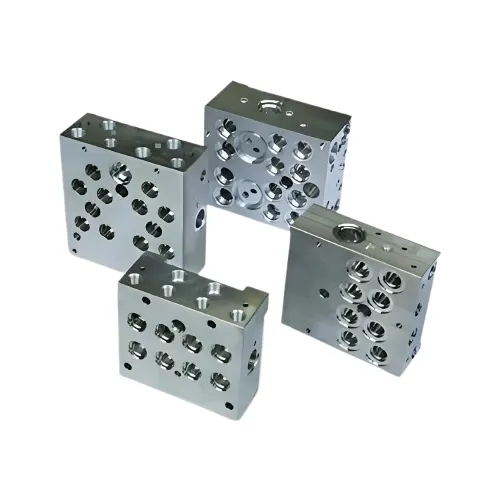
What Materials Are Best for CNC Machined Prototypes in Industrial Applications?
Choosing the right material depends on the intended function of the prototype, environmental conditions, and mechanical requirements. Our factory provides a wide range of materials that are widely used in industrial CNC Machined Prototypes.
1. Aluminum Alloys
- High machinability and corrosion resistance
- Lightweight yet strong for functional prototypes
- Excellent thermal and electrical conductivity
- Ideal for aerospace, automotive, and electronics applications
2. Stainless Steel
- Superior mechanical strength and wear resistance
- Corrosion-resistant in harsh environments
- Provides precise dimensional stability for prototypes
- Common in food processing, medical, and chemical industries
3. Titanium
- Exceptional strength-to-weight ratio
- High resistance to heat and corrosion
- Preferred for aerospace, marine, and medical implants
- Machining requires advanced CNC techniques available in our factory
4. Plastics (ABS, Polycarbonate, POM)
- Lightweight and easy to machine
- High impact resistance and dimensional stability
- Cost-effective solution for early-stage prototypes
- Suitable for consumer products, electronics, and packaging
5. Copper and Brass
- Excellent electrical and thermal conductivity
- Ideal for functional prototypes involving electronics or heat transfer
- Brass provides corrosion resistance and aesthetic appeal
- Machining requires careful handling to maintain precision
Material Specifications Table
| Material | Density (g/cm3) | Tensile Strength (MPa) | Hardness (HB) | Applications |
| Aluminum 6061 | 2.70 | 310 | 95 | Aerospace, automotive, electronics |
| Stainless Steel 304 | 8.0 | 505 | 201 | Medical, food processing, chemical |
| Titanium Grade 5 | 4.43 | 950 | 330 | Aerospace, marine, medical implants |
| ABS Plastic | 1.05 | 40 | Not applicable | Consumer products, electronics |
| POM Plastic | 1.41 | 70 | Not applicable | Functional parts, mechanical prototypes |
How Do Material Properties Affect Prototype Performance?
The performance of CNC Machined Prototypes is heavily influenced by the intrinsic properties of the chosen materials. At Ningbo Wonderful Numerical Control Technology Co.,Ltd., our engineering team carefully evaluates these properties to ensure that prototypes achieve optimal functionality, durability, and reliability in industrial applications.
1. Mechanical Strength and Toughness
Materials with high tensile and yield strength, such as stainless steel and titanium, allow prototypes to endure load-bearing tests and repeated stress. Toughness ensures resistance to fracture or failure during impact testing. Our CNC Machined Prototypes undergo rigorous assessment to verify that mechanical properties match the intended application.
2. Thermal Properties
Thermal conductivity and expansion are crucial for prototypes used in high-temperature environments. Aluminum alloys offer excellent thermal conductivity, making them ideal for heat-dissipating components. Titanium provides thermal stability at extreme temperatures, while plastics like POM require careful consideration for heat-sensitive applications. Our factory implements material-specific machining techniques to minimize distortion caused by heat.
3. Wear and Abrasion Resistance
Prototypes subject to mechanical motion or contact must resist surface wear. Stainless steel and certain engineering plastics exhibit high wear resistance, extending prototype lifecycle during iterative testing. Our CNC Machined Prototypes are designed to minimize material degradation while maintaining precision tolerances.
4. Chemical and Corrosion Resistance
Exposure to chemicals, moisture, or industrial fluids necessitates materials that do not corrode or react. Stainless steel and titanium are suitable for prototypes in harsh environments, while certain plastics provide chemical inertness. Our engineering team selects materials that maintain structural integrity under real-world conditions.
5. Surface Finish and Aesthetics
The material choice impacts achievable surface quality, which is important for functional testing and visual assessment. Metals allow polishing, anodizing, or plating, while plastics may require smoothing or painting. At our factory, CNC Machined Prototypes are optimized for the best surface finish according to material properties.
6. Machinability and Tolerance Control
Machinability affects production efficiency and final accuracy. Materials like aluminum and ABS are easier to machine, enabling faster turnaround times. Hard metals require precise tooling, careful feed rates, and advanced CNC programming. Our factory ensures that each prototype achieves dimensional accuracy and tight tolerance control regardless of material hardness.
7. Weight and Density Considerations
The weight of a prototype influences handling, assembly, and performance testing. Aluminum and plastics are lightweight, reducing prototype mass while maintaining strength. Titanium offers high strength-to-weight ratio for aerospace or automotive applications. Our CNC Machined Prototypes balance material density with functional requirements to optimize performance.
8. Electrical and Magnetic Properties
For prototypes used in electronics or electromagnetic applications, conductivity, permittivity, and magnetic permeability are critical. Copper and brass provide high electrical conductivity, while certain plastics offer insulation properties. Our material selection process ensures that electrical performance aligns with industrial specifications.
Our Material Specifications for CNC Machined Prototypes
At Ningbo Wonderful Numerical Control Technology Co.,Ltd., we provide detailed specifications for each material used in CNC Machined Prototypes. Our factory focuses on precision, reliability, and suitability for industrial applications across multiple sectors. Our materials are selected for mechanical, thermal, and chemical performance, ensuring that each prototype meets rigorous engineering standards.
1. Metals
- Aluminum 6061: Density 2.70 g/cm³, tensile strength 310 MPa, hardness 95 HB. Excellent corrosion resistance and thermal conductivity, ideal for aerospace, automotive, and electronics.
- Stainless Steel 304: Density 8.0 g/cm³, tensile strength 505 MPa, hardness 201 HB. High durability and corrosion resistance, suitable for medical, food processing, and chemical industries.
- Titanium Grade 5: Density 4.43 g/cm³, tensile strength 950 MPa, hardness 330 HB. Exceptional strength-to-weight ratio and thermal stability, used in aerospace, marine, and medical implants.
- Copper and Brass: Excellent electrical and thermal conductivity. Suitable for prototypes involving electronics, heat transfer, and decorative applications.
2. Plastics
- ABS: Density 1.05 g/cm³, tensile strength 40 MPa. Lightweight, easy to machine, cost-effective for early-stage prototypes.
- POM: Density 1.41 g/cm³, tensile strength 70 MPa. High impact resistance and dimensional stability for mechanical and functional testing.
- Polycarbonate: High impact resistance, transparent options available, suitable for functional visual prototypes.
Material Properties Table
| Material | Density (g/cm³) | Tensile Strength (MPa) | Hardness (HB) | Thermal Conductivity (W/m·K) | Applications |
| Aluminum 6061 | 2.70 | 310 | 95 | 167 | Aerospace, automotive, electronics |
| Stainless Steel 304 | 8.0 | 505 | 201 | 16 | Medical, food processing, chemical |
| Titanium Grade 5 | 4.43 | 950 | 330 | 7 | Aerospace, marine, medical implants |
| ABS Plastic | 1.05 | 40 | Not applicable | 0.2 | Consumer products, electronics |
| POM Plastic | 1.41 | 70 | Not applicable | 0.31 | Functional parts, mechanical prototypes |
| Copper | 8.96 | 210 | Not applicable | 401 | Electronics, thermal applications |
| Brass | 8.50 | 370 | 95 | 109 | Decorative, mechanical, electrical |
Our CNC Machined Prototypes are optimized for performance, durability, and manufacturability. By understanding material properties in depth, Ningbo Wonderful Numerical Control Technology Co.,Ltd. ensures that each prototype meets functional requirements and industrial standards. Our factory leverages advanced CNC capabilities, material-specific strategies, and precise quality control to deliver high-quality prototypes for our clients.
Summary
Selecting the right materials is critical for producing reliable and functional CNC Machined Prototypes. Our factory at Ningbo Wonderful Numerical Control Technology Co.,Ltd. provides a wide range of metals and plastics, supporting industrial applications across aerospace, automotive, medical, and electronics sectors. By understanding material properties such as strength, machinability, thermal stability, wear resistance, and surface finish, our team ensures that each prototype meets the highest standards. Investing in the right material saves time, reduces cost, and enhances product development efficiency.
For high-quality CNC Machined Prototypes that meet your industrial requirements, contact Ningbo Wonderful Numerical Control Technology Co.,Ltd. Our experts are ready to provide customized solutions tailored to your project needs.
FAQ
Q1: What Are Materials Best for CNC Machined Prototypes in Industrial Applications?
The best materials vary depending on application, but commonly include aluminum, stainless steel, titanium, and high-performance plastics. Each offers unique advantages in strength, machinability, and cost.
Q2: How do I choose between metals and plastics for prototypes?
Metals provide high strength and durability for functional testing, while plastics are cost-effective and easier to machine for early-stage design validation. Our factory evaluates the project requirements to recommend the optimal choice.
Q3: What factors affect machinability of prototype materials?
Material hardness, thermal conductivity, and structural uniformity influence machinability. Aluminum and ABS are easier to machine, whereas titanium and hardened steel require specialized CNC tooling.
Q4: Can CNC Machined Prototypes be used in high-temperature environments?
Yes, metals like stainless steel and titanium maintain dimensional stability at high temperatures. Plastics may require engineering grades with enhanced thermal resistance.
Q5: How does material selection impact cost?
High-performance metals increase production cost due to material price and machining complexity. Plastics reduce cost but may not provide equivalent strength. Our factory balances performance with cost efficiency.
Q6: Are there industry standards for prototype materials?
Yes, materials like ASTM aluminum alloys, stainless steel grades, and engineering plastics adhere to international standards, ensuring reliable mechanical properties for industrial applications.
Q7: How important is surface finish in material selection?
Surface finish affects both aesthetics and functional performance. Metals allow polishing and coating, while plastics may require smoothing. Our factory optimizes surface finish during CNC machining.
Q8: Can we customize material selection for specific industrial needs?
Absolutely. Our factory at Ningbo Wonderful Numerical Control Technology Co.,Ltd. provides tailored material solutions based on load, environmental, and functional requirements for each CNC Machined Prototype.
Related News
- How Can a PCD Non Standard Forming Cutter Transform High-Precision Machining
- High-Performance Aluminum Alloys Continue to Evolve as Demand for Precision Aerospace Machining Grows
- How Can CNC Blades Improve Machining Accuracy and Tool Life?
- What Makes CNC Machined Prototypes for Automotive Parts Worth Choosing Before Production?
- How Can Non-standard Custom Tools Solve Real Machining Problems Better Than Standard Tools?
- How Can Drilling Tools Improve Precision, Stability, and Cost Control in Modern Machining?
Leave me a message